Context-RFx
context-driven acquisition platform engineered for better outcomes
Introducing Context-RFx
Context-RFx is an agentic-AI enabled acquisition platform envisioned to support the federal acquisition lifecycle by capturing agency, mission, and procurement context and applying that context throughout structured acquisition workflows. The platform is designed to provide traceable context, compliance guardrails, standards-aligned artifacts, and human-guided decision support across the acquisition process..
The current MVP intelligently automates the solicitation development artifacts using federal standard acquisition ontology and knowledge graph using agency and mission-need contextual information and Graph RAG to structure requirements and generate acquisition artifacts. Context-RFx is purpose-built for acquisition, combining contextual intelligence, structured workflows, and stakeholder-in-the-loop review to improve the quality, consistency, and efficiency of acquisition package development.
GAO found that median procurement administrative lead times (PALT) decreased overall from FY2019 to FY2022 for DoD contracts above $250,000 — but for large procurements over $50 million, median PALT increased by 70 days
—2024 GAO Report
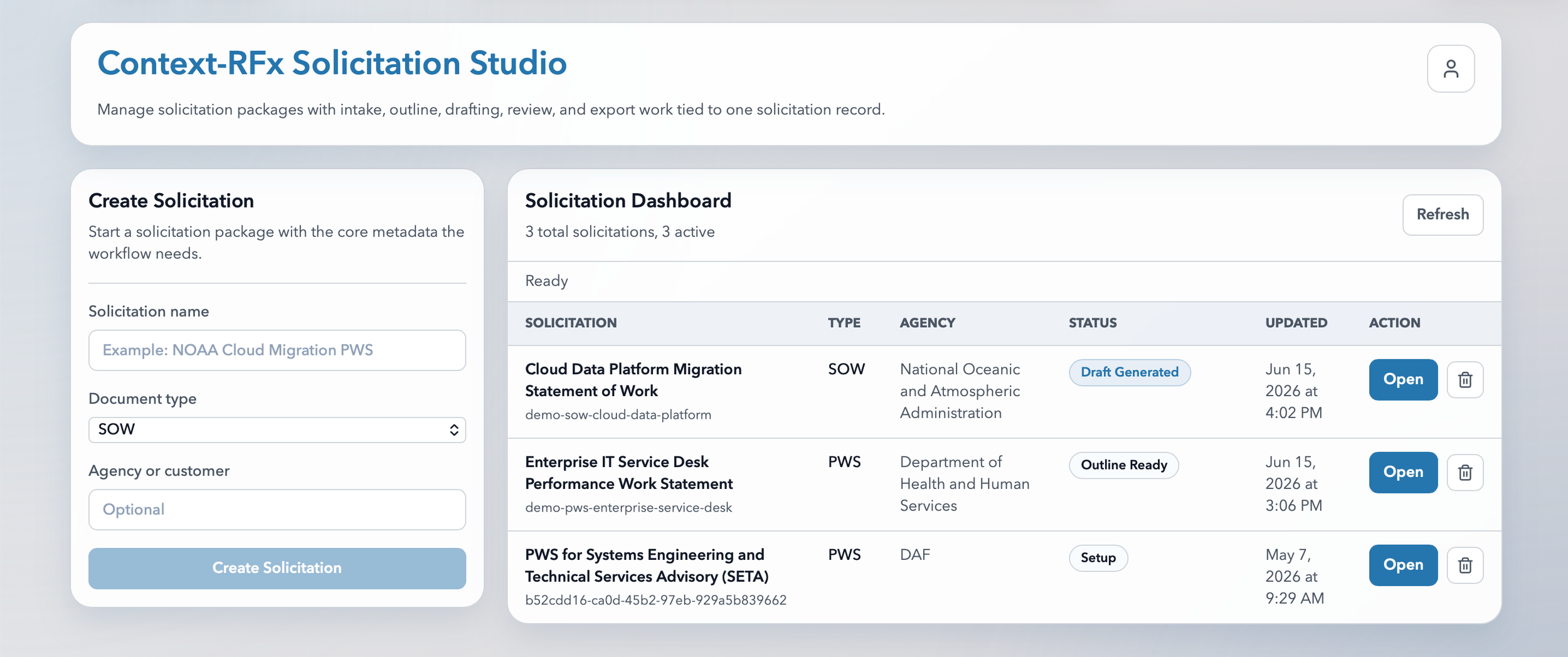
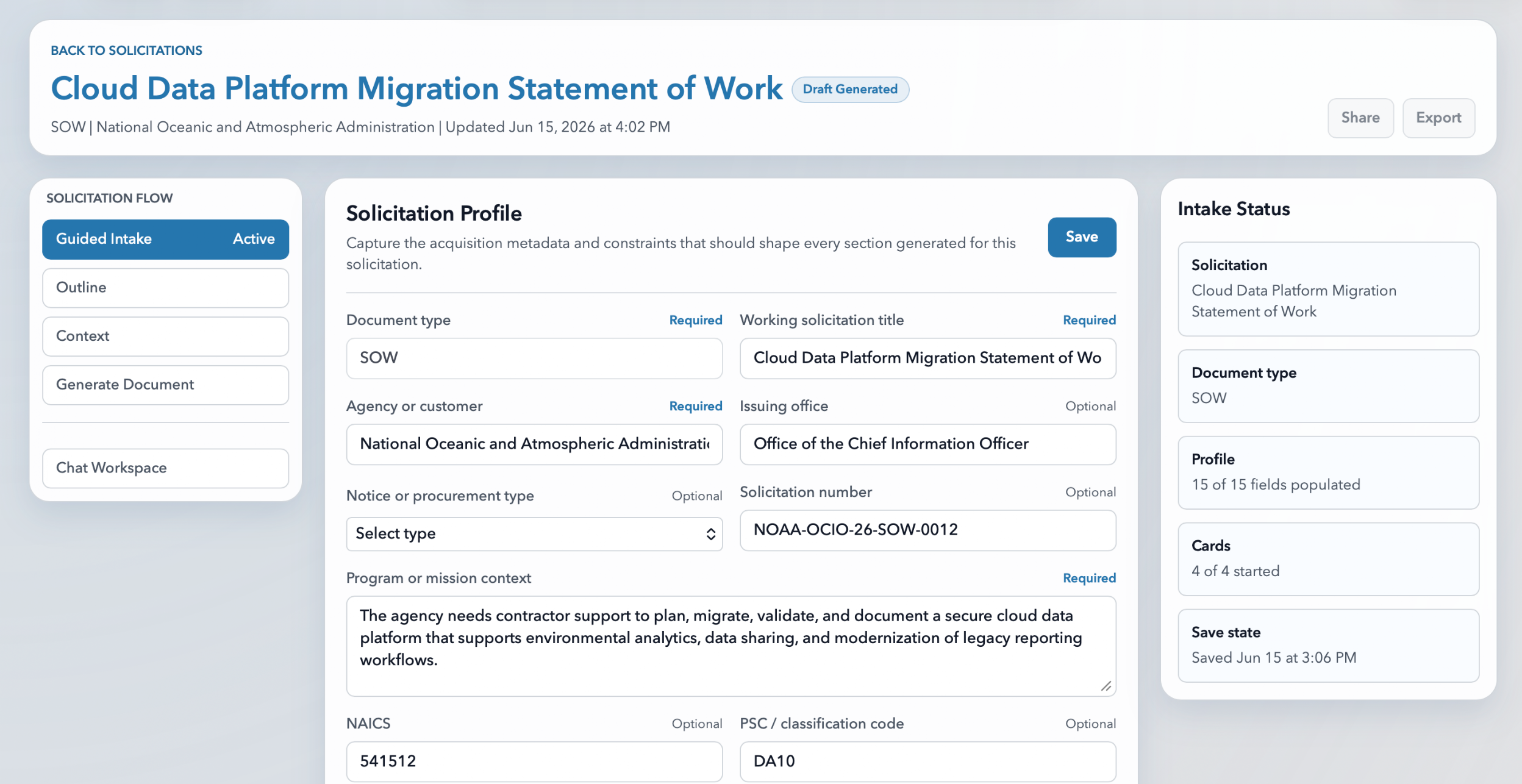
Context-RFx Differentiators
Ontology & Knowledge-graph
Ontology‑driven, knowledge‑graph implementation that standardizes the acquisition process, ensures provenance, and delivers consistent, reliable acquisition workflows
Project Structure
Context‑RFx Project feature become the mission’s single source of truth, managing market research, solicitations, submissions, evaluations, awards, and contract records
Graph RAG Based
Linking related acquisition knowledge, GraphRAG improves retrieval accuracy, enriches contextual understanding, and produces grounded, traceable responses
Acquisition Context
Context‑RFx is a closed-loop platform that organizes acquisition context to clarify requirements, align with regulations, ensure compliance, and reduce variability
Acquisition Intelligence Advisor
An acquisition intelligence advisor grounded in the same closed‑loop context, so every inquiry and revision stays aligned with that specific acquisition context
Target Personas
Contracting Offices
Program Offices
Prime Contractors
Systems Engineers
Advisory Firms
The Outcomes
Accelerate the Mission-to-Award
Reduced acquisition lead time while maintaining acquisition rigor and human oversight.
Knowledge to Enterprise Asset
Preserved and reusable institutional acquisition knowledge that improves consistency, continuity, and organizational learning across procurements.
Improved Decision Intelligence
Better informed, evidence-based and defensible acquisition decisions with transparent rationale from requirement through award.
Secure by Design
Context access is restricted to authorized scope, so sensitive acquisition information stays contained.
Workforce Capacity & Effectiveness
Increased acquisition workforce capacity by augmenting professionals with governed AI while preserving human authority over consequential acquisition decisions.
Reduced Acquisition Risk
Lower acquisition risk through built-in compliance, end-to-end traceability, and earlier identification of requirements and decision gaps..
Mission Value
Greater mission effectiveness and better value for taxpayer dollars by focusing acquisition investments on the capabilities that advance mission priorities.